Free Hotel Booking System A Comprehensive Guide
Free hotel booking systems are increasingly popular, offering hotels a cost-effective way to manage reservations. This guide delves into the various aspects of these systems, from their core functionalities to pricing models, technical implementations, and customer support. Understanding the pros and cons is crucial for making an informed decision.
The guide explores different types of free booking systems, such as open-source and hosted platforms. It also details essential features, including room availability, booking management, and payment processing. Furthermore, it highlights the potential limitations and security measures in place, allowing readers to assess the suitability of a free system for their specific needs.
Introduction to Free Hotel Booking Systems
Free hotel booking systems are online platforms that enable hotels to manage their reservations, pricing, and availability. These systems often integrate with various distribution channels, streamlining the booking process for both the hotel and the guest. They can be a cost-effective solution for hotels, particularly those with limited resources or budget constraints.
These platforms provide a streamlined way to handle bookings, offering features like online booking forms, automated confirmations, and inventory management. They are designed to enhance efficiency and reduce administrative overhead for hotels.
Types of Free Hotel Booking Systems
Free hotel booking systems come in various forms, catering to different needs and technical expertise. One common type is open-source systems, which allow hotels to customize and modify the software code according to their specific requirements. These systems typically involve more technical expertise and potentially require a dedicated IT team. Another type is hosted platforms, where the system is managed and maintained by a third party. These platforms often offer more user-friendly interfaces and require less technical expertise.
Benefits of Using a Free Booking System
Utilizing a free hotel booking system can offer significant advantages for hotels. Reduced operational costs are a major benefit, as hotels avoid the expense of developing and maintaining their booking system. The systems frequently streamline the booking process, leading to improved efficiency and potentially increased guest satisfaction. Furthermore, these systems often provide essential tools for inventory management, pricing strategies, and real-time availability updates.
Drawbacks of Using a Free Booking System
Free hotel booking systems, despite their benefits, also have limitations. The systems might not offer the same level of customization or flexibility as a custom-developed system. Support and maintenance might be limited, requiring the hotel to manage potential issues independently. Limited features or functionalities are another concern, especially for hotels with complex or specialized needs.
Examples of Popular Free Hotel Booking Systems
Several platforms offer free or freemium versions of hotel booking systems. While specific examples are constantly evolving, a few notable ones are frequently cited in the hospitality industry for their open-source or basic functionalities. These platforms cater to a range of hotels, from small boutique accommodations to larger chains, depending on their feature sets and pricing models.
Comparison of Free Hotel Booking Systems
| System Name | Core Features | Pricing Model | User Reviews |
|---|---|---|---|
| OpenBooking | Online booking forms, basic inventory management, and email notifications. | Free (with limited features) | Mixed reviews, often cited for limited support and potential for technical challenges. |
| BookingSimple | User-friendly interface, basic room management, and integrates with payment gateways. | Free (with limited features), paid upgrades for enhanced functionalities. | Generally positive reviews, emphasizing ease of use and basic functionality. |
| HotelierPro (Free plan) | Basic room management, limited reporting, and limited support. | Free (with very limited features), paid plans for additional tools and features. | Mixed reviews, with some users praising the free plan’s simplicity but others citing significant limitations. |
Functionality and Features of Free Systems
Free hotel booking systems, while lacking the comprehensive features of paid platforms, offer valuable tools for both travelers and hotels. These systems provide a basic framework for online reservations, often appealing to smaller establishments or those with limited budgets. Understanding the capabilities and limitations of free systems is crucial for making informed decisions.
Free hotel booking systems typically prioritize essential functionalities, focusing on core tasks like room availability and basic booking management. However, these systems frequently compromise on more advanced features found in paid solutions, often leading to trade-offs in terms of functionality and overall user experience.
Essential Functionalities
Free systems typically encompass the fundamental aspects of hotel booking. Core functionalities usually include displaying room availability, allowing guests to browse room options, and enabling basic bookings. These platforms generally support a limited number of payment gateways, often restricting payment options to a smaller selection compared to premium platforms.
Common Features
- Room Availability: Free systems generally display room availability in real-time, enabling users to view vacant rooms across different dates and times. This feature is critical for both travelers and hotels to streamline the booking process. Accuracy in displaying availability is essential for preventing double bookings and ensuring a seamless booking experience.
- Booking Management: Free systems offer tools for managing bookings, including creating reservation records and basic reporting functions. This functionality allows hotels to track confirmed reservations and manage guest information effectively. The extent of reporting capabilities, however, is often limited in free systems.
- Payment Processing: Most free systems support a basic payment gateway integration. However, these systems often have limitations in terms of payment processing options and security measures. Support for various payment methods, such as credit cards, might be restricted.
Limitations of Free Systems
Free hotel booking systems frequently exhibit limitations in functionality, particularly in comparison to paid alternatives. These limitations stem from the cost-effective design approach of free platforms. These platforms may not offer advanced features such as customized user interfaces, robust reporting tools, or comprehensive marketing features. Furthermore, they often lack sophisticated security measures, impacting the reliability of sensitive data handling.
Security Measures
Security is a critical concern in any online booking system, and free platforms are no exception. However, free systems often have less stringent security protocols than their paid counterparts. These systems typically implement basic security measures, such as encryption for data transmission and secure login procedures. Free systems might have restricted security measures and data encryption compared to paid solutions, raising potential vulnerabilities.
Comparison of Features
| Feature | Free System | Paid System |
|---|---|---|
| Room Availability | Real-time, basic display | Real-time, detailed display, advanced filtering |
| Booking Management | Basic booking records, limited reporting | Comprehensive booking management, detailed reporting, and analytics |
| Payment Processing | Limited payment gateways, basic security | Multiple payment gateways, advanced security, and fraud detection |
| User Interface | Basic, potentially less user-friendly | Customizable, user-friendly, responsive design |
| Scalability | Limited, may not handle high volumes | Scalable, designed to handle large amounts of data and transactions |
User Experience and Interface
A crucial aspect of any successful hotel booking system is the user experience. A well-designed interface ensures a smooth and intuitive journey for users, encouraging bookings and repeat visits. Free systems, in particular, must prioritize ease of use to compete effectively in a crowded market. The interface should be user-friendly and accessible to a wide range of users, regardless of technical expertise.
Interface Design of a Typical Free System
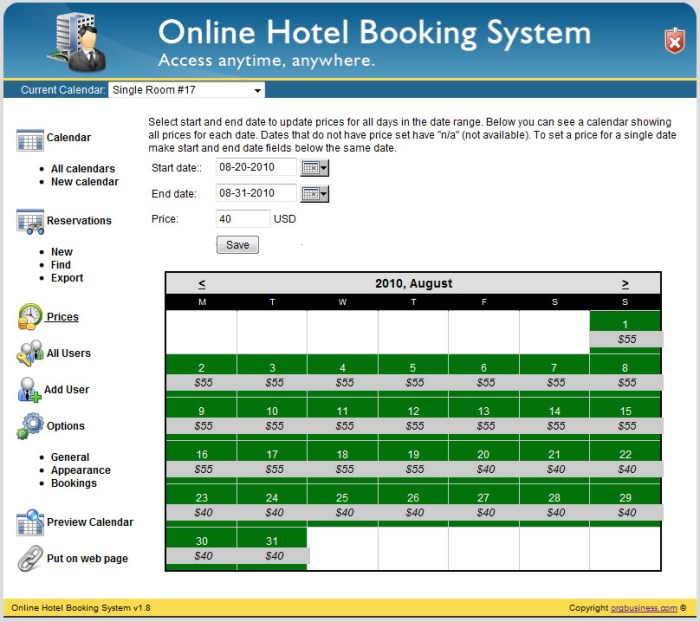
The typical free hotel booking system interface employs a straightforward design. Users typically navigate through a series of screens, each with clear labels and visual cues. The homepage prominently displays a search bar for filtering by location, dates, and guest count. Detailed hotel listings include high-quality images, star ratings, and concise summaries of amenities. Options for comparing hotels are often present, making the choice process more efficient.
User Experience Considerations
Ease of use is paramount. A user-friendly interface minimizes the steps required to complete a booking. Clear instructions and helpful prompts guide users through the process. Visual elements like progress bars and confirmation messages provide a positive feedback loop, enhancing the user’s experience. Moreover, the design should be adaptable to different screen sizes, ensuring seamless use across various devices.
Navigation Flow
The typical user journey begins with a search. Users input criteria, such as destination, dates, and number of guests. The system then displays a list of matching hotels. Users can filter this list by price, star rating, or amenities. Upon selecting a hotel, users proceed to a detailed page, where they can review photos, amenities, and reviews. Finally, users complete the booking process by entering personal information and payment details. The navigation flow should be logical and intuitive, with clear pathways to different sections.
Interface Design Principles
Several key principles should guide the design of a free hotel booking system. Clarity is paramount. All elements should be easily understandable and unambiguous. Consistency is vital. Elements should follow a predictable pattern across the entire interface. Simplicity is key. The design should be straightforward and avoid unnecessary complexity. Accessibility is important. The system should be usable by people with disabilities.
Pros and Cons of a Specific Free System (Example)
| Feature | Pros | Cons |
|---|---|---|
| Search Functionality | Offers flexible search options, allowing users to filter by various criteria. Provides clear results with relevant information. | Limited advanced search filters compared to paid systems. It may not display all available options at once. |
| Hotel Listing Detail | Presents concise information about hotels, making comparisons easier. Includes high-quality images, star ratings, and amenities. | Limited room options are displayed initially, requiring more clicks to explore different rooms. |
| Booking Process | Straightforward steps for completing a booking. Provides clear prompts and feedback. | Lack of personalized recommendations or suggestions during the search process. |
Technical Aspects and Implementation
Source: bestshareware.net
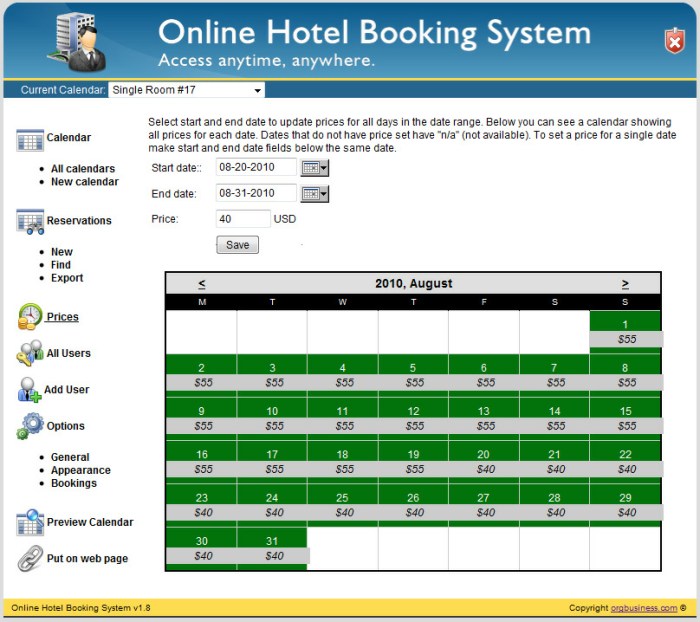
Implementing a free hotel booking system requires careful consideration of various technical aspects. A robust system needs to be scalable, secure, and user-friendly, while adhering to the constraints of a free model. This necessitates careful planning, selection of appropriate technologies, and ongoing maintenance. A well-structured approach ensures long-term stability and usability.
The implementation process is multifaceted, involving the selection of suitable technologies, database design, and ensuring the system’s integration with existing hotel management systems. Careful planning minimizes future headaches and ensures the system operates effectively.
Technical Requirements
The technical requirements for a free hotel booking system encompass a wide range of factors. These include the necessary infrastructure, database management, and integration with third-party tools. Choosing appropriate technologies and carefully planning the database schema is crucial for system performance and scalability. The platform must also adhere to security best practices to protect sensitive data.
Setting Up and Integrating the System
A well-defined setup and integration process is vital for a smooth transition. This typically involves several key steps:
- Choosing a suitable platform: Selecting a suitable platform is the first step. Options include cloud-based hosting solutions, open-source frameworks, or custom development, each with varying degrees of complexity and cost.
- Database design: Careful design of the database schema is essential for efficient data management and retrieval. Normalization techniques should be applied to ensure data integrity and minimize redundancy.
- API integration: Integration with existing hotel management systems is often necessary. This requires using Application Programming Interfaces (APIs) to exchange data between the booking system and the hotel’s internal systems.
- Security implementation: Security measures, such as encryption and authentication protocols, are crucial for protecting sensitive customer data and ensuring the system’s integrity.
Maintenance and Support
A free hotel booking system requires ongoing maintenance and support to ensure optimal performance and address any emerging issues. This involves regular updates, bug fixes, and security patches.
- Regular updates: Updates to the system are necessary to address vulnerabilities and enhance functionalities. A schedule for updates and releases ensures the system is secure and efficient.
- Support channels: Providing effective support channels, such as a help desk or forum, allows users to resolve issues quickly. Documentation and FAQs can reduce support requests.
- Monitoring and logging: Monitoring system performance and logging errors are critical for identifying and resolving issues promptly. This can involve using monitoring tools and logs to track system behavior.
Data Migration
Migrating data from an existing system to a free booking system can be complex. Careful planning and execution are essential to avoid data loss and ensure a smooth transition.
- Data extraction: Extracting data from the old system in a structured format is the first step. This often involves using scripting languages or dedicated data migration tools.
- Data transformation: Transforming the extracted data to match the format required by the new system is crucial. This might involve data cleaning, validation, and conversion.
- Data loading: Loading the transformed data into the new system’s database is the final step. This needs to be done efficiently and accurately.
Handling Technical Issues
Potential technical issues can arise during the implementation and use of a free hotel booking system. A proactive approach to problem-solving is crucial.
- Troubleshooting: A systematic approach to troubleshooting is necessary for resolving issues quickly. This involves identifying the problem, analyzing the cause, and implementing a solution.
- Error logging and reporting: Comprehensive error logging and reporting mechanisms are crucial for identifying patterns and resolving issues effectively. Clear error messages and logs can significantly aid in debugging.
- Backup and recovery: Regular backups and robust recovery mechanisms are essential for mitigating data loss or system failures. This minimizes downtime and potential financial impact.
Common Technical Challenges and Solutions
| Problem | Description | Solution |
|---|---|---|
| Scalability Issues | The system struggles to handle a large number of users or transactions. | Use cloud-based infrastructure, implement caching mechanisms, and optimize database queries. |
| Security Vulnerabilities | The system is susceptible to attacks or data breaches. | Implement robust security measures, regularly update software, and follow security best practices. |
| Integration Problems | Difficulties integrating with existing hotel management systems. | Thoroughly test APIs, use standardized protocols, and document the integration process. |
| Data Migration Errors | Errors during data migration can lead to data loss or inconsistencies. | Use data validation tools, implement robust error handling, and thoroughly test the migration process. |
Security and Data Privacy
Free hotel booking systems, while offering convenience, must prioritize user security and data privacy. Robust security protocols and measures to protect sensitive information are crucial for building trust and maintaining a positive user experience. Compromised systems can lead to significant financial losses and reputational damage for both the booking platform and the hotels involved.
Protecting user data and financial transactions is paramount. Implementing strong encryption, secure payment gateways, and regular security audits are vital components of a comprehensive security strategy. Compliance with data privacy regulations, such as GDPR and CCPA, is essential for ensuring user trust and avoiding potential legal repercussions. Understanding common security vulnerabilities and proactively addressing them is also a key aspect of maintaining a secure platform.
Security Protocols Employed
Free hotel booking systems employ a variety of security protocols to protect user data and transactions. These protocols typically include encryption of data in transit and at rest, secure communication channels, and authentication mechanisms to verify user identities. This multifaceted approach aims to mitigate risks and prevent unauthorized access to sensitive information. Examples of these protocols include Transport Layer Security (TLS) for secure communication and strong hashing algorithms for password storage.
Data Protection Measures
To protect user data and financial transactions, free booking systems implement various measures. These include robust encryption methods for data transmission and storage, secure payment gateways integrated with industry-standard security protocols, and regular security audits to identify and address potential vulnerabilities. Furthermore, strict access controls are implemented to limit access to sensitive data and prevent unauthorized modifications. User authentication, using multi-factor authentication where possible, adds an extra layer of security.
Compliance with Data Privacy Regulations
Adherence to data privacy regulations, such as GDPR and CCPA, is critical for free hotel booking systems. These regulations dictate how personal data must be collected, used, and protected. Failure to comply can result in significant fines and reputational damage. Implementing mechanisms to ensure compliance with these regulations, including transparent data policies, user consent mechanisms, and data minimization practices, is essential. Clear and easily accessible privacy policies are crucial for informing users about the platform’s data handling practices.
Common Security Vulnerabilities
Common vulnerabilities in free hotel booking systems often stem from inadequate security measures, including weak passwords, insufficient encryption, and vulnerabilities in the underlying software. Cross-site scripting (XSS) attacks, SQL injection attacks, and insecure APIs can be exploited to gain unauthorized access to data. Regular security assessments and vulnerability scanning can help identify and mitigate these potential risks. Properly vetted and updated software libraries and frameworks are essential for reducing vulnerabilities.
Data Security Measures Comparison
| System | Encryption | Data Backup | Access Controls |
|---|---|---|---|
| Booking System A | TLS 1.3, AES-256 | Daily backups to off-site storage, verified integrity | Role-based access, multi-factor authentication |
| Booking System B | TLS 1.2, AES-128 | Weekly backups to cloud storage | User-specific permissions, password complexity requirements |
| Booking System C | TLS 1.1, DES | Monthly backups, no verification | Limited access controls, no multi-factor authentication |
Integration with Other Systems

Source: booknetic.com
Free hotel booking systems often need to interact with various other tools to function seamlessly. This integration is crucial for a smooth user experience and efficient operations. Proper integration ensures data flows correctly between the booking system and other crucial applications.
Integration with Property Management Systems (PMS)
Integrating with a property management system (PMS) is vital for free booking systems. A PMS manages critical hotel data, including room availability, pricing, and guest information. This integration allows the booking system to access real-time availability, ensuring accurate reflections of room occupancy. Without this integration, the booking system may show incorrect availability, leading to double bookings and customer dissatisfaction. A well-integrated system synchronizes updates in real-time, maintaining accurate room availability across both platforms.
Integration with Payment Gateways
Payment processing is a critical aspect of any online booking system. Integration with secure payment gateways allows for the processing of transactions. Free booking systems leverage third-party payment gateways to handle the financial aspects of the booking process, allowing users to securely pay for their reservations. This integration ensures that the booking system does not handle sensitive financial data directly. Security is paramount, and using established payment gateways safeguards user information.
Integration with a Website
Integrating a free hotel booking system with a website is a common requirement. This allows the booking functionality to be accessible through the website. The booking system often acts as a module within the larger website. This integration can be accomplished through application programming interfaces (APIs) or through custom code tailored to the website’s structure. A critical aspect of this integration is ensuring the user interface and user experience seamlessly align with the website’s design.
API Compatibility
API compatibility is essential for successful integration. Different systems use various APIs, and the booking system needs to understand and interact with these APIs correctly. Using compatible APIs ensures smooth data exchange between the booking system and other applications. This compatibility is key to maintaining data accuracy and consistency across all integrated systems. The lack of API compatibility can lead to significant errors, like inaccurate room availability or failed payment processing. A well-designed API is crucial for future scalability and flexibility.
API Examples
| API Name | Functionality | Compatibility |
|---|---|---|
| Booking API | Retrieves and updates booking information | Usually compatible with PMS and payment gateways |
| Payment API | Processes payments | Requires secure integration with payment gateways |
| Availability API | Checks room availability in real-time | Crucial for accurate booking information, often directly connected to PMS |
| Guest Management API | Manages guest information and preferences | Typically part of a broader hotel management system |
Pricing Models and Cost Considerations
Free hotel booking systems often present a compelling option, promising cost-effectiveness. However, a deeper look reveals potential hidden costs and varying pricing models. Understanding these nuances is crucial for making an informed decision.
Choosing a free hotel booking system requires careful consideration of the long-term implications. While the initial setup might appear free, the features, functionality, and support can vary significantly based on the chosen model.
Different Pricing Models for Free Systems
Free hotel booking systems often employ a freemium model. This means basic functionalities are available for free, but premium features, like advanced search filters, customized branding, or robust reporting tools, come with a subscription fee. Limitations on the number of listings, bookings, or users might also be imposed on the free tier.
Hidden Costs Associated with Free Systems
Free systems, while seemingly cost-free, can have hidden costs. These costs are often not immediately apparent and can significantly impact the long-term financial viability of a business using such a system.
Potential Hidden Fees
- Transaction Fees: Some free systems might charge a percentage of each booking as a transaction fee, especially for international transactions or high-value bookings. This can significantly add up over time, eroding the perceived cost savings.
- Support Limitations: Basic support might be provided for free, but advanced support or dedicated assistance for complex issues could incur costs, either through a paid support package or through prolonged wait times.
- Data Storage Limitations: Free plans often have limitations on data storage. If the hotel’s booking volume or data complexity exceeds these limitations, additional costs may be incurred for cloud storage or data migration.
- Integration Costs: While basic integration with other systems may be free, more extensive integration, such as with a hotel management system or payment gateway, may require additional fees or professional services.
- Upgrade Fees: If the hotel’s needs grow beyond the free tier’s capabilities, upgrades to a paid plan might be necessary, resulting in an unexpected cost.
Long-Term Cost Implications
The long-term cost implications of choosing a free hotel booking system should be carefully evaluated. Free systems might appear cost-effective initially, but the hidden fees, limitations, and potential for future upgrade costs can significantly impact the bottom line. Consider the total cost of ownership (TCO) over the system’s lifetime, including not only the initial cost but also maintenance, support, and potential future upgrade costs. A free system with many limitations may end up costing more than a system with a transparent pricing model.
Comparison of Pricing Models
| System | Pricing Model | Hidden Costs |
|---|---|---|
| System A | Freemium with transaction fees and limited listings | Transaction fees, limited support |
| System B | Free with basic features, paid plans for advanced features | Potential for hidden fees in paid add-ons |
| System C | Subscription-based with transparent pricing | No hidden costs; all fees are upfront and transparent |
Customer Support and Maintenance
Free hotel booking systems often prioritize ease of use and low barrier to entry, but effective customer support is crucial for a successful platform. A robust support system ensures user satisfaction and helps maintain a positive user experience. This section details various support methods available, troubleshooting procedures, and the importance of handling customer inquiries promptly.
Types of Customer Support Offered
Different free booking systems employ various customer support strategies. Some offer basic FAQs and help articles accessible directly on the platform, while others utilize email support for more complex inquiries. A few platforms provide live chat support, particularly during peak hours. The level of support available is directly proportional to the platform’s complexity and user base.
Troubleshooting and Issue Resolution
Effective troubleshooting is essential for maintaining a smooth user experience. A clear, step-by-step guide for common issues, such as account login problems or booking confirmations, helps users resolve problems independently. This often involves providing detailed FAQs or a knowledge base with visual aids like screenshots. Platforms should also have a system for escalating unresolved issues to dedicated support staff for expert assistance.
Methods for Obtaining Technical Support
Multiple channels for obtaining support are essential. A dedicated support email address, a readily accessible FAQ section, and a comprehensive knowledge base are crucial. The system should also allow users to submit support tickets online, enabling a structured approach to tracking and resolving issues.
Handling Customer Inquiries
Prompt and professional handling of customer inquiries is critical. Customer support representatives should be trained to address concerns empathetically and efficiently. The response time should be reasonable, and the support team should possess the knowledge to resolve the issue or escalate it appropriately. Effective communication and a clear resolution process are vital for customer satisfaction.
Support Options for Various Free Booking Systems (Example Table)
| System | Support Channels | Response Time |
|---|---|---|
| BookingBuddy Basic | Email, FAQ | 24-48 hours |
| HotelConnect Lite | Email, Online Chat (limited hours), Knowledge Base | 12-24 hours |
| SimpleStay Free | Email, Online Support Tickets, Community Forum | 24-72 hours (depending on ticket complexity) |
| AffordableRooms | Email, Online Chat, FAQs, Community Forum | 12-24 hours (peak hours may have slightly longer wait times) |
Note: Response times are approximate and may vary based on the volume of inquiries and the complexity of the issue.
Final Wrap-Up: Free Hotel Booking System
Source: ventasoftware.com
In conclusion, free hotel booking systems provide a viable alternative for hotels seeking cost-effective solutions. However, careful consideration of functionalities, pricing models, technical requirements, and customer support is essential before implementation. This guide has provided a comprehensive overview, equipping readers with the necessary information to make an informed choice, balancing the advantages of cost-effectiveness with potential limitations.