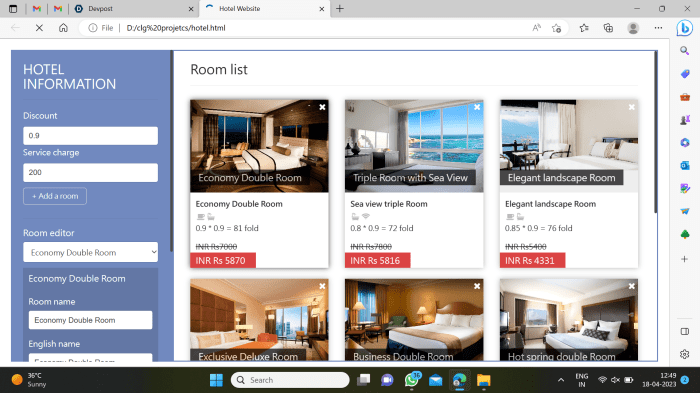
Room Booking Platform A Comprehensive Guide
Room booking platform is essential for modern businesses and organizations. From easily managing meeting rooms to booking hotel stays, these platforms streamline the process. They offer various functionalities, including online and mobile booking options, catering to different needs. This guide explores the intricacies of these platforms, covering everything from user experience to business models and future innovations.
The core functionalities of a room booking platform revolve around enabling users to reserve spaces quickly and efficiently. This encompasses a wide range of options, from compact meeting rooms to expansive conference halls and hotel rooms. The user interface is crucial, and a well-designed platform should allow users to easily search for available rooms, select dates and times, and complete the booking process with minimal effort. Different booking models, such as online and mobile, offer varying degrees of convenience and accessibility. Understanding the key features of popular platforms and the various business models employed provides a comprehensive picture of this growing industry.
Introduction to Room Booking Platforms
Room booking platforms have become indispensable tools for managing and scheduling various types of spaces, from small meeting rooms to large conference halls and hotel accommodations. These platforms streamline the process of reserving resources, providing a centralized and efficient way to manage bookings, track availability, and facilitate communication between users. They empower individuals and organizations to optimize their use of space and time.
A typical room booking platform offers a suite of functionalities that facilitate the entire booking process. These include real-time availability checks, secure online payment options, customizable booking calendars, and detailed reporting on usage patterns. Moreover, they often incorporate features for managing multiple users and permissions, ensuring that only authorized personnel can make bookings.
Core Functionalities of Room Booking Platforms
Room booking platforms typically feature a user-friendly interface for browsing available spaces and scheduling bookings. Users can filter results based on various criteria, such as room size, amenities, and date/time availability. Integration with calendars and email systems is common, enabling automatic reminders and notifications about upcoming bookings.
Types of Rooms Bookable
The variety of spaces that can be booked through these platforms is substantial. Commonly available are meeting rooms, equipped with essential amenities like whiteboards, projectors, and audio-visual equipment. Larger venues such as conference halls are also frequently featured, providing a capacity for large gatherings and events. Hotels offer a wide range of room types, from standard rooms to suites, catering to diverse needs.
Comparison of Booking Platform Models
Online booking platforms provide a convenient way to access and manage bookings from anywhere with an internet connection. They are often highly scalable, accommodating a large number of users and bookings simultaneously. Mobile-based platforms offer a similar level of convenience but with the added benefit of accessibility on the go. They are particularly useful for spontaneous bookings and for those who frequently need to check availability or make quick adjustments to existing bookings.
Key Features of Popular Room Booking Platforms
This table compares three popular room booking platforms, highlighting key features:
| Feature | Platform A | Platform B | Platform C |
|---|---|---|---|
| Real-time Availability | Yes, with advanced filtering options | Yes, with an integrated calendar | Yes, with customizable booking slots |
| User Management | Supports multiple users and roles | Allows for user permissions and access control | Offers group booking features |
| Payment Integration | Secure payment gateways | Multiple payment options available | Supports recurring bookings |
| Reporting & Analytics | Detailed usage reports | Real-time booking trends | Customizable dashboards |
Platform A excels in providing comprehensive filtering options, while Platform B emphasizes the integration with calendars for better synchronization. Platform C stands out with its customizable dashboard features. These platforms demonstrate the diverse functionality offered by modern room booking software.
User Experience and Interface Design
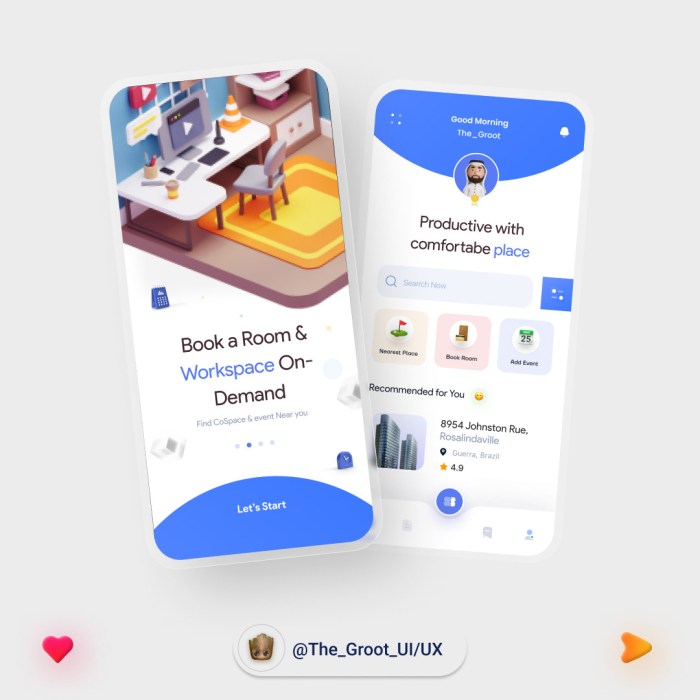
Source: behance.net
A crucial aspect of any successful room booking platform is the user experience (UX). A well-designed interface significantly impacts user satisfaction, engagement, and ultimately, the platform’s success. Intuitive navigation and seamless booking processes are key to minimizing frustration and encouraging repeat bookings.
A user-friendly interface fosters a positive perception of the platform, encouraging users to return and recommend it to others. This positive experience directly translates into increased bookings and platform growth.
Importance of User-Friendly Interfaces
A user-friendly interface streamlines the booking process, reducing the cognitive load on users. This, in turn, leads to a more positive user experience, which is essential for customer satisfaction and platform loyalty. Clear and concise design elements, including visual hierarchy and intuitive navigation, are paramount in creating a user-friendly experience.
Best Practices for Intuitive Navigation and Search
Effective navigation is crucial for users to easily find the information they need. This involves logical organization of menus, clear labeling of options, and a well-defined site structure. A well-structured search function is equally important. Users should be able to quickly and easily locate rooms based on their criteria, whether it’s date, time, capacity, or specific amenities. Search filters should be well-organized and readily accessible.
UI/UX Design Elements
The visual design of a room booking platform plays a significant role in user engagement. Consistent use of color palettes, typography, and icons contributes to a cohesive and recognizable brand identity. A carefully considered color scheme can create a specific mood and atmosphere, such as a warm, inviting feeling for a hotel booking platform. Typography should be legible and appropriate for the platform’s overall style. Icons should be clear, consistent, and readily understood by users.
| Element | Description | Example |
|---|---|---|
| Color Palette | A selection of colors is used throughout the platform. | A calming blue-green palette for a nature-themed platform. |
| Typography | Font choices and sizes. | A clean, modern sans-serif font for readability. |
| Icons | Visual representations of actions or features. | A magnifying glass icon for search, a calendar icon for date selection. |
Booking Calendars and Time Slots
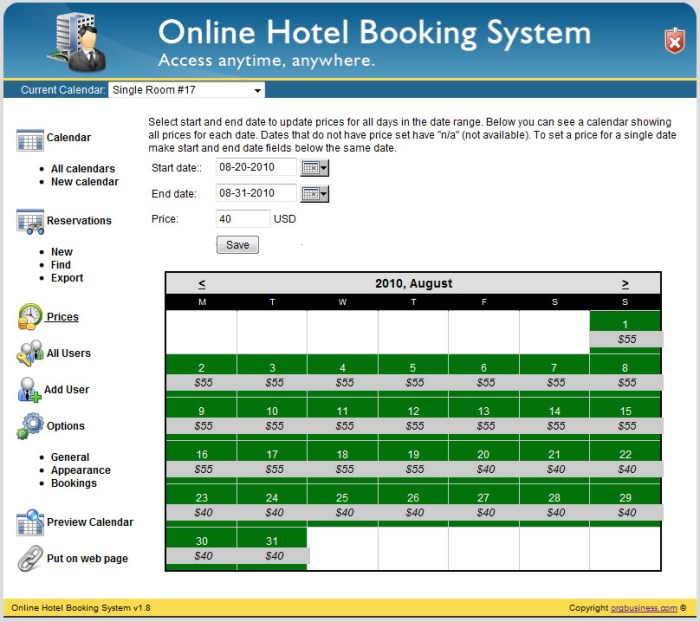
Booking calendars are a fundamental component of room booking platforms. They should be clear, easy to navigate, and visually represent available time slots. A calendar should allow users to easily select dates and times, and indicate which slots are occupied or unavailable. Color-coding can effectively distinguish between available and unavailable slots.
Different Booking Methods
Various booking methods can be employed, each with its strengths and weaknesses. Drag-and-drop calendars provide a highly intuitive way for users to select time slots, but may not be suitable for all platforms. Calendar selection, on the other hand, allows for a clear and organized visual representation of available times. The best method depends on the specific platform’s design and target audience.
Effective Search Filters
Search filters enable users to refine their search criteria. Essential filters include date ranges, room capacity, amenities, and pricing. Users should be able to combine multiple filters to narrow their search results to precisely match their requirements. Advanced search filters such as proximity to specific locations or accessibility features should also be considered.
Business Models and Revenue Generation
Room booking platforms employ various business models to generate revenue, catering to diverse needs and operating environments. These models often involve a mix of commission structures, subscription fees, and potentially other revenue streams, each with its own set of advantages and disadvantages. Understanding these models is crucial for platform operators and users alike.
Different models are adopted based on the specific type of rooms being booked, target audience, and the overall strategy of the platform. This allows for tailored pricing and revenue generation, and ultimately, enhances user experience and satisfaction.
Different Business Models
Room booking platforms utilize several business models, primarily categorized as commission-based, subscription-based, or a hybrid approach. A commission-based model typically involves the platform receiving a percentage of each booking made through their site. Subscription models often involve charging a fee for access to the platform’s features or services. Hybrid models combine elements of both commission and subscription structures.
Revenue Streams
Several revenue streams are common in room booking platforms. These include commission on bookings, subscription fees for premium features or enhanced services, advertising revenue, and potential partnerships with related businesses (e.g., travel agencies).
Pricing Strategies
Room booking platforms employ diverse pricing strategies to maximize revenue and attract users. These strategies are influenced by the room type, seasonality, demand, and competitive landscape.
Pricing Models for Room Types
Different pricing models are applied to various room types, taking into account factors such as amenities, location, and demand. For example, hotels with superior amenities might adopt a premium pricing model, while budget-friendly hostels might utilize a more competitive pricing structure.
- Luxury Suites: Higher pricing reflecting exclusive amenities and services.
- Standard Rooms: Mid-range pricing based on average market rates.
- Budget-friendly Hostels: Lower pricing geared towards budget-conscious travelers.
- Special Occasion Packages: Higher pricing for rooms booked for specific events.
Payment Gateway Integration
Integrating with secure payment gateways is essential for room booking platforms. This ensures smooth transactions, protects sensitive data, and adheres to industry regulations and best practices. The selection of a payment gateway should consider factors such as transaction fees, security measures, and the platform’s target audience.
Revenue Model Comparison
| Revenue Model | Advantages | Disadvantages |
|---|---|---|
| Commission-based | Simple structure, revenue directly tied to bookings | Potential for lower revenue per booking, reliance on booking volume |
| Subscription-based | Predictable revenue stream, potential for higher revenue per user | Requires building a user base, with potential for churn |
| Hybrid | Combining the benefits of both models, potentially higher revenue and more flexibility | A complex structure requires careful balancing of commission and subscription elements. |
Technological Aspects
A successful room booking platform relies heavily on robust technology to manage availability, bookings, and user interactions seamlessly. The platform’s architecture must be scalable to accommodate increasing demand and ensure a positive user experience. This section details the key technical considerations for building a functional and reliable room booking platform.
Technical Infrastructure
The infrastructure supporting a room booking platform requires a combination of components. A reliable server infrastructure is crucial to handle the load of concurrent users and bookings. High-availability systems, load balancers, and caching mechanisms are vital for ensuring platform uptime and responsiveness. Database servers must be optimized for speed and reliability, capable of handling large volumes of data and queries. The platform also needs a robust payment gateway integration to handle secure transactions. The entire system must be designed for scalability to accommodate future growth.
Database Structure for Availability and Bookings
A well-structured database is essential for efficient storage and retrieval of room availability and booking information. A relational database management system (RDBMS) is typically employed. This structure allows for seamless querying of available rooms based on various criteria, such as date, time, room type, and capacity. The database schema should include tables for rooms, users, bookings, and potentially additional details like amenities or special requests. Relationships between these tables are crucial for efficient data retrieval and manipulation. For example, a ‘rooms’ table could contain details about each room, while a ‘bookings’ table would record specific booking information, linked to the ‘rooms’ table by a foreign key. This relational design ensures data integrity and allows for complex queries to be executed efficiently.
Security Measures
Security is paramount for protecting user data and ensuring the integrity of transactions. Strong encryption protocols, such as TLS/SSL, should be employed for all communication between the platform and users. Data encryption at rest is also crucial to safeguard sensitive information stored in the database. Robust authentication and authorization mechanisms should be implemented to verify user identities and control access to specific functionalities. Regular security audits and penetration testing are essential to identify and mitigate potential vulnerabilities. Implementing multi-factor authentication (MFA) adds another layer of security for user accounts. Furthermore, compliance with relevant data protection regulations (e.g., GDPR) is mandatory.
Comparison of Technologies
Different technologies are available for developing room booking platforms. A comparison would consider factors like programming languages (e.g., Python, Java, Node.js), frameworks (e.g., Django, Spring Boot, React), and cloud platforms (e.g., AWS, Azure, Google Cloud). The choice of technology depends on factors like development team expertise, project requirements, and budget constraints. Each technology has strengths and weaknesses that influence the development timeline, maintenance costs, and overall platform performance.
Scalability
Scalability is essential for accommodating increasing user growth and booking volume. The platform architecture should be designed with horizontal scaling in mind. This involves distributing the workload across multiple servers, enabling the platform to handle larger numbers of users and transactions. Load balancing techniques can distribute incoming requests across multiple servers, preventing any single point of failure. Employing a cloud-based infrastructure provides the flexibility and resources needed to adapt to fluctuations in demand. This allows for dynamic scaling, enabling the platform to adjust its resources based on real-time needs. For example, during peak booking periods, more resources can be allocated to handle the increased load.
Technologies Used in Room Booking Platforms
| Technology Category | Specific Technology | Description |
|---|---|---|
| Programming Languages | Python, Java, Node.js | Used for backend development, offering varying strengths and weaknesses. |
| Frameworks | Django, Spring Boot, React | Provide structure and tools for building the application, influencing development speed and maintainability. |
| Databases | MySQL, PostgreSQL, MongoDB | Used for storing data about rooms, users, and bookings. Each has strengths in different aspects of data management. |
| Cloud Platforms | AWS, Azure, Google Cloud | Offer scalable infrastructure and services, enabling efficient handling of a growing user base and bookings. |
Marketing and Promotion Strategies: Room Booking Platform
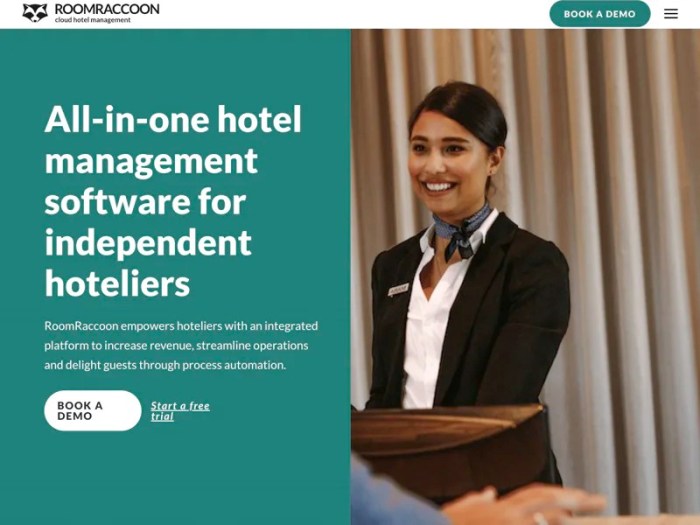
Source: bookinglive.com
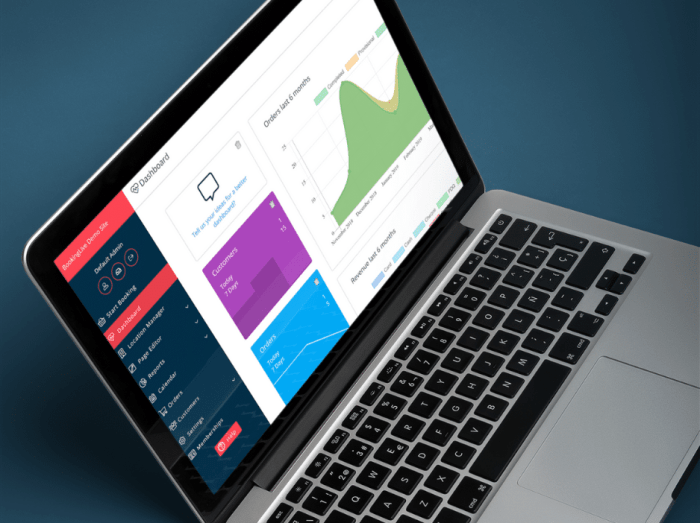
Attracting users to a room booking platform requires a multifaceted approach that leverages various marketing channels. Effective strategies not only generate interest but also foster brand loyalty and drive bookings. A well-defined marketing plan is essential for success in a competitive market.
Strategies for Attracting Users
A successful room booking platform needs to employ a diverse range of marketing strategies to reach its target audience. This involves understanding the preferences and needs of potential customers, tailoring messaging accordingly, and ensuring a seamless user experience. Key strategies include targeted advertising campaigns, engaging social media presence, and content marketing initiatives.
- Targeted Advertising Campaigns: Platforms like Google Ads and social media advertising enable precise targeting based on demographics, interests, and online behavior. This ensures that ads reach potential users most likely to be interested in room bookings. For instance, a platform catering to business travelers could target users searching for corporate accommodations.
- Social Media Presence: Building a strong social media presence is crucial for brand awareness and engagement. Consistent posting of high-quality content, running contests, and responding to user comments foster a sense of community and trust. Visual content like stunning photos of rooms and testimonials from satisfied guests are particularly effective.
- Content Marketing: Creating valuable content, such as blog posts, articles, and videos, positions the platform as a trusted resource. This could involve offering insights into travel trends, providing tips for finding the best deals, or sharing user stories about positive experiences. For example, a blog post on the “Top 10 Budget-Friendly Hotels in Paris” would attract potential travelers looking for cost-effective options.
Online Marketing and Advertising
Online marketing and advertising play a critical role in driving traffic and generating bookings for room booking platforms. These methods are crucial for reaching a broad audience and building brand awareness.
- Search Engine Optimization (: Optimizing website content for relevant keywords improves search engine rankings, increasing visibility to potential users actively searching for room bookings. s like “cheap hotel deals,” “conference rooms near me,” or “luxury vacation rentals” are crucial to attract users who are actively looking for rooms.
- Pay-Per-Click (PPC) Advertising: Paid advertising on search engines and social media platforms allows platforms to target specific s or demographics, driving immediate traffic to the booking site. Platforms like Google Ads allow for precise targeting based on user search queries, ensuring ads reach those actively looking for rooms.
Social Media Presence for Brand Awareness
Social media platforms are powerful tools for building brand awareness and fostering engagement. Maintaining an active presence on these platforms allows platforms to connect with potential customers directly.
- Community Building: Engaging with potential customers through interactive content, responding to comments, and hosting contests builds a strong sense of community around the platform. Sharing user reviews and testimonials helps build trust and credibility.
- Visual Storytelling: High-quality images and videos showcasing the unique features of rooms and destinations significantly enhance the appeal of the platform. This creates a visual narrative that draws potential users in and makes the platform more attractive.
Content Marketing Strategies
Content marketing involves creating and distributing valuable, relevant, and consistent content to attract and retain a clearly defined audience.
- Blog Posts: Regularly updating a blog with informative content on travel destinations, booking tips, and accommodation reviews positions the platform as a go-to resource for travelers. Sharing valuable insights and expert opinions helps build trust and authority.
- Infographics and Videos: These visually engaging formats can effectively communicate complex information and capture attention, making the platform more memorable and accessible.
Email Marketing Campaigns, Room booking platform
Email marketing allows for direct communication with potential customers.
- Targeted Promotions: Sending out newsletters with exclusive deals, promotions, and new listings directly to potential customers. Tailoring promotions based on user preferences, such as their previous bookings or stated interests, increases the effectiveness of these campaigns.
Comparison of Marketing Strategies
| Marketing Strategy | Description | Pros | Cons |
|---|---|---|---|
| Targeted Advertising | Focuses on specific demographics | High reach, precise targeting | Costly, requires expertise |
| Social Media Marketing | Builds community, fosters engagement | Low cost, broad reach | Requires consistent effort, difficult to measure ROI |
| Content Marketing | Positions as a trusted resource | Builds authority, attracts organic traffic | Takes time to show results, requires consistent effort |
| Email Marketing | Direct communication with potential customers | High conversion potential, personalized communication | Requires building an email list, can be spammy if not managed well |
Integration with Other Services
Seamless integration with existing business tools is crucial for a robust room booking platform. This enables users to leverage their current workflows, reducing friction and increasing adoption. By connecting with various applications, the platform enhances efficiency and provides a comprehensive solution for managing room availability and bookings.
Integration with Calendar Applications
Calendar applications are fundamental to daily scheduling. Integrating a room booking platform with popular calendar tools like Google Calendar, Outlook Calendar, and Apple Calendar allows users to view and manage room availability directly within their existing calendar systems. This eliminates the need to switch between applications, streamlining the booking process and improving user experience. This integration enables automatic updates to calendars, ensuring real-time visibility of room schedules.
Integration with Project Management Tools
Many businesses rely on project management tools to coordinate tasks and allocate resources. Integrating the room booking platform with tools like Asana, Trello, or Jira enables project managers to easily reserve rooms for meetings, workshops, or team collaborations directly within their project management workflows. This integration streamlines resource allocation and improves the efficiency of project management. For instance, a task in Asana might automatically trigger a room booking request within the platform, saving time and reducing manual effort.
Integration with Customer Relationship Management (CRM) Systems
Integrating with CRM systems is vital for managing customer interactions and booking history. A room booking platform can pull customer data from CRM systems to pre-populate booking forms or associate bookings with specific contacts. This enhances customer relationship management by allowing the platform to automatically record booking information directly within the CRM, facilitating detailed customer analysis and personalized services. For example, if a customer is frequently booking a specific room, the platform can automatically generate reports and insights for the sales team, enhancing their service quality.
Integration with External Booking Systems
Many organizations have existing booking systems for various resources. Integrating the room booking platform with external booking systems allows for seamless data exchange and consolidated room availability. This approach avoids data duplication and ensures that all relevant booking information is readily available to users. The integration process can be designed to synchronize room availability across different booking systems, preventing conflicts and ensuring accurate information for all users.
Integration with Payment Processing Systems
Secure and reliable payment processing is essential for any online booking platform. Integrating with payment gateways like Stripe, PayPal, or Square allows for secure online transactions and automated payment processing. This ensures efficient handling of payments and reduces administrative burden on the platform’s staff. The integration should adhere to all relevant security standards and regulations, safeguarding sensitive financial information.
Potential Integrations Table
| Integration Type | Description | Benefits | Examples of Tools |
|---|---|---|---|
| Calendar Applications | Synchronization of room availability with user calendars. | Improved user experience, real-time availability. | Google Calendar, Outlook Calendar, Apple Calendar |
| Project Management Tools | Linking room bookings to project tasks and resources. | Streamlined resource allocation, improved project management. | Asana, Trello, Jira |
| CRM Systems | Data exchange for customer information and booking history. | Enhanced customer relationship management, data analysis. | Salesforce, HubSpot, Zoho CRM |
| External Booking Systems | Data synchronization for consolidated availability. | Reduced data duplication, accurate information. | Existing hotel or venue booking systems |
| Payment Processing Systems | Secure online payment processing. | Efficient handling of transactions, reduced administrative burden. | Stripe, PayPal, Square |
Future Trends and Innovations
The room booking platform industry is constantly evolving, driven by technological advancements and changing user expectations. This section explores emerging trends, including the potential of AI and machine learning, virtual and augmented reality, and the growing importance of sustainable practices. These advancements promise to reshape the way users interact with and benefit from these platforms.
The future of room booking platforms hinges on integrating innovative technologies to provide seamless and personalized experiences. This includes anticipating user needs and optimizing processes for both users and platform administrators. By understanding these emerging trends, platforms can adapt and remain competitive in the ever-changing landscape.
Emerging Trends in the Room Booking Industry
The room booking platform landscape is experiencing a dynamic shift, driven by several key trends. These trends are impacting user experience, operational efficiency, and revenue generation for these platforms. Adapting to these trends is crucial for staying competitive.
- Increased personalization: Platforms are moving beyond basic search filters to offer personalized recommendations based on user preferences, past bookings, and even contextual factors like time of year or event type. This enhances the user experience by streamlining the booking process and improving user satisfaction.
- Integration with smart home technology: Future platforms are expected to integrate with smart home ecosystems. This allows users to control room settings (temperature, lighting, etc.) remotely and seamlessly before or after their bookings. This seamless integration improves user convenience and enhances the overall experience.
- Emphasis on sustainability: Growing environmental awareness is driving the incorporation of eco-friendly features. These include carbon footprint calculators, options for sustainable accommodations, and incentives for eco-conscious bookings. This reflects the rising importance of environmentally responsible practices within the travel and hospitality industries.
AI and Machine Learning in Optimizing Room Bookings
AI and machine learning have the potential to revolutionize room booking platforms by automating tasks and providing more accurate predictions. These technologies are proving valuable in optimizing the entire booking process.
- Predictive analytics: AI can analyze historical booking data to predict demand fluctuations and adjust pricing strategies dynamically. This can lead to increased revenue for the platform and more competitive pricing for users.
- Personalized recommendations: Machine learning algorithms can analyze user preferences and provide tailored recommendations for rooms, dates, and amenities, improving the user experience and increasing conversion rates.
- Automated customer service: Chatbots and virtual assistants can handle common inquiries and provide instant support, improving response times and overall customer satisfaction.
Virtual Reality and Augmented Reality in Room Visualization
VR and AR technologies are transforming how users experience and visualize rooms. This leads to more informed decisions before booking.
- Immersive room previews: VR allows users to virtually tour potential rooms, providing a more realistic and engaging experience compared to static images. This enhances the booking process by allowing users to experience the room as if they were present.
- Augmented reality overlays: AR can overlay information about room features, amenities, and pricing directly onto a user’s mobile device, providing a real-time and interactive experience. This aids users in making informed decisions during the booking process.
Sustainable Practices in Booking Platforms
Integrating sustainable practices into room booking platforms is becoming increasingly important. These initiatives support environmental responsibility and attract environmentally conscious users.
- Carbon footprint calculators: Platforms can incorporate tools that estimate the carbon footprint of a booking, allowing users to make more informed choices. These tools help users make more environmentally conscious travel decisions.
- Partnerships with sustainable accommodations: Collaborations with eco-friendly hotels and venues can provide users with sustainable options, promoting eco-tourism and reducing environmental impact.
- Incentivizing sustainable choices: Offering discounts or rewards for bookings at eco-friendly accommodations encourages users to opt for environmentally responsible choices.
Innovative Features for Future Platforms
The future of room booking platforms will likely incorporate innovative features. These features focus on improving the user experience and adding value for both users and providers.
- Dynamic pricing: Integrating real-time pricing adjustments based on factors like demand and seasonality can enhance profitability and provide users with more competitive pricing.
- Integrated payment gateways: A seamless integration of various payment options can improve the overall booking experience, providing convenience and security for users.
- Community features: Building a community feature allows users to share experiences and recommendations, creating a more engaging and personalized booking platform.
Potential Future Trends Table
| Trend | Description | Impact |
|---|---|---|
| AI-powered personalization | Tailored recommendations and dynamic pricing | Enhanced user experience, increased conversions |
| VR/AR room visualization | Immersive room previews and interactive overlays | Improved decision-making, reduced uncertainty |
| Sustainable booking features | Carbon footprint calculators, eco-friendly options | Increased user engagement, environmental responsibility |
| Smart home integration | Remote control of room settings | Enhanced convenience, personalized experience |
Final Thoughts
Source: roommanager.com
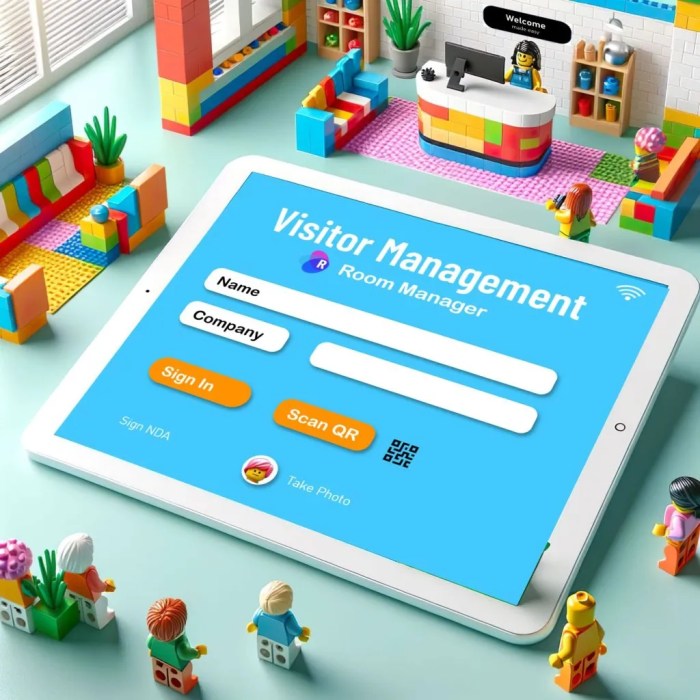
In conclusion, room booking platforms are rapidly evolving to meet the demands of a dynamic market. Their ability to integrate with other services, like calendars and CRM systems, enhances their utility. Future trends indicate an increasing reliance on AI and machine learning to optimize booking processes, offering greater convenience and personalization. A deep dive into the technological aspects, marketing strategies, and user experience considerations is critical for building successful room booking platforms. The key takeaway is that the success of a platform hinges on its ability to cater to user needs and seamlessly integrate into the workflow of its clients.